Quick answer
A rodent inspection looks at the signs you found, the areas where activity is happening and the likely entry points, then turns those findings into a removal, exclusion and cleanup plan.
Tell the technician what you noticed
Start with the location and timing of the problem: where you heard scratching, where droppings appeared, whether food or materials were damaged, and how long the issue has been happening. Photos can be useful if the evidence is in a hard-to-reach area.
Inspect the active areas
The inspection may focus on attics, garages, crawlspaces, wall-adjacent areas or other locations connected to the reported signs. The goal is to find physical evidence that supports the next step rather than rely on sound alone.
Check likely entry points
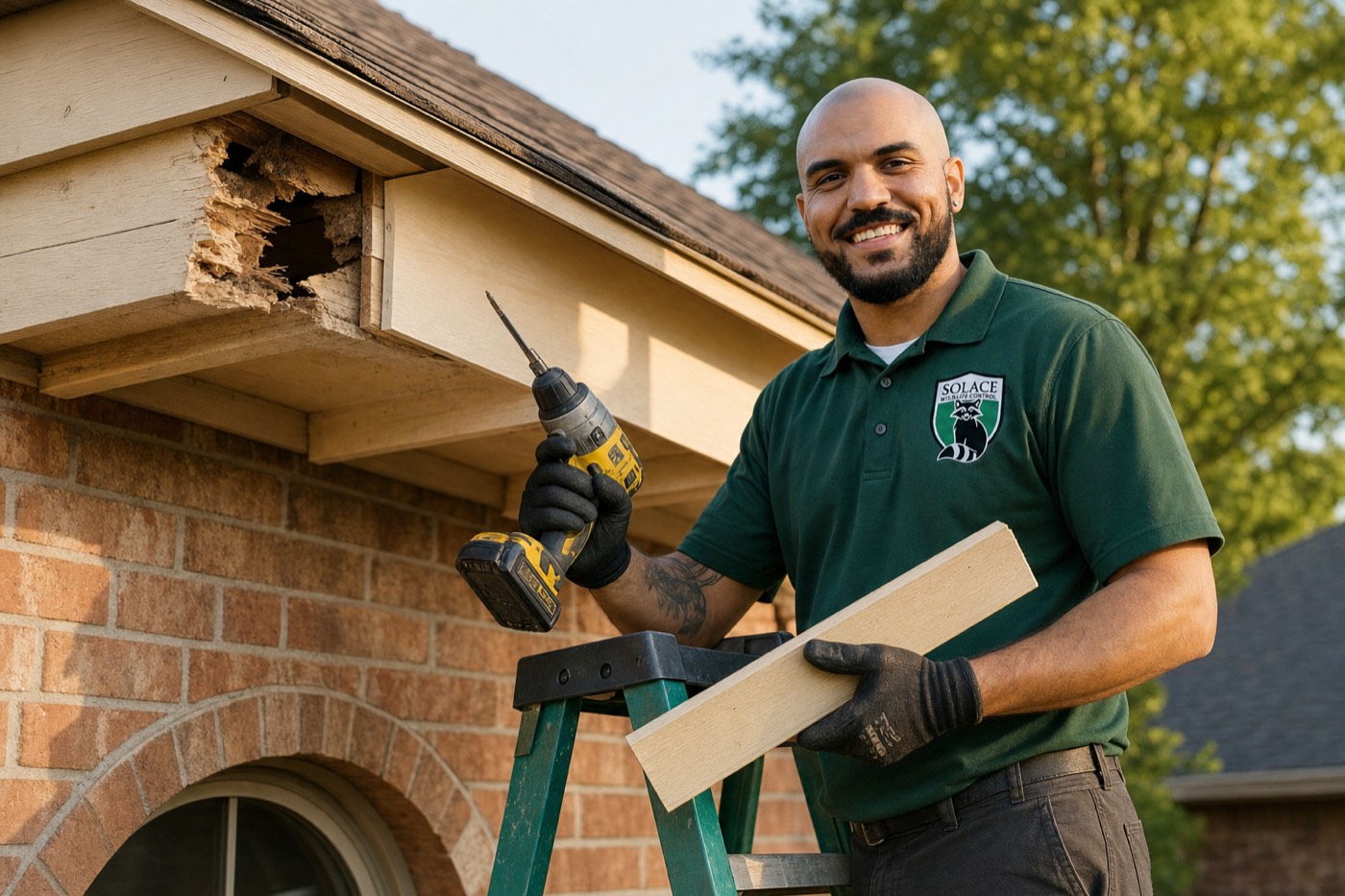
The exterior is important because a rodent problem inside usually has an access route. Doors, vents, utility penetrations, foundation transitions, roofline details and damaged materials are examples of areas that may need closer attention.
Build the removal plan
The method depends on the animal, the location and the property conditions. The plan should explain what will be done for the current activity and what work is recommended to reduce recurrence.
Discuss exclusion, repairs and sanitation
If openings or damage are found, exclusion or repair work can be quoted. If droppings or other biowaste have contaminated an area, sanitation may also be recommended. Solace provides a written price and contract before approved work begins.
What to ask before approving work
Ask which evidence supports the diagnosis, which entry points are considered active or high risk, what removal work is included, what exclusion is recommended and what signs you should monitor afterward. A clear plan should connect each recommended step to something found at the property.
Need help with rats or mice?
Solace Wildlife Control provides free inspections in the normal service area and can quote rodent removal, exclusion, repair and sanitation work based on what is found at the property.